
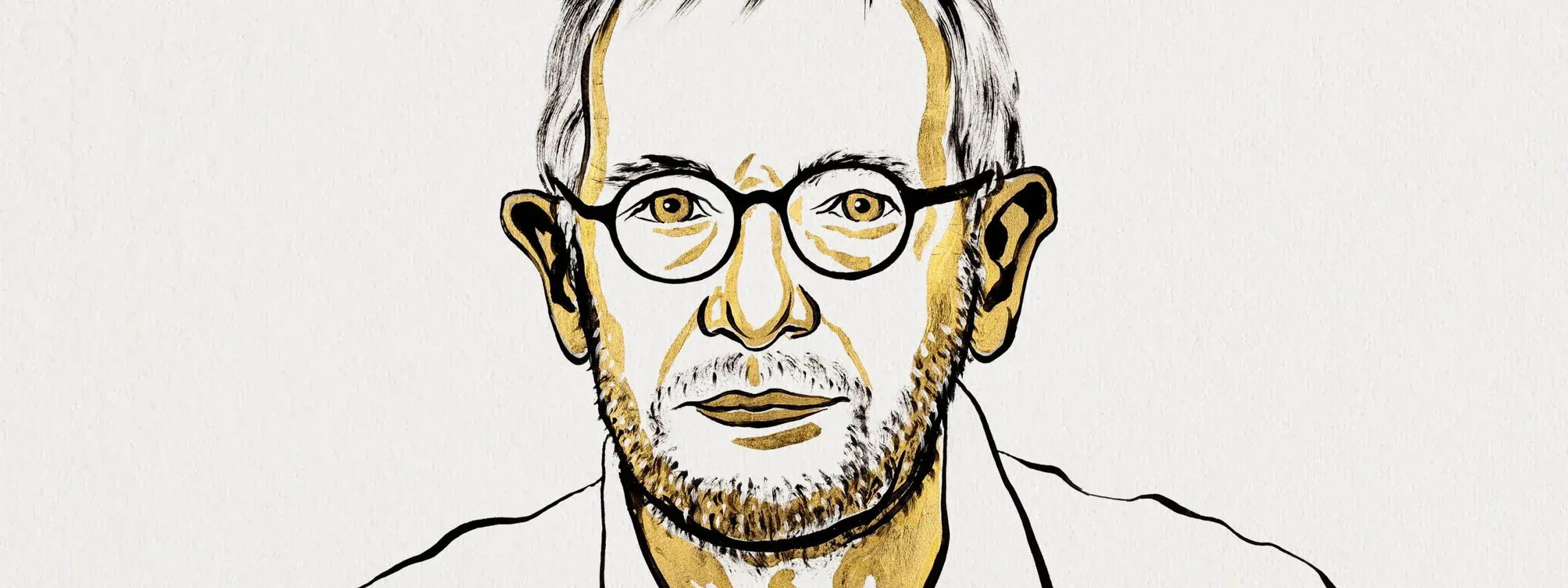
Nobel Prize in Physics 2026
On Tuesday, 6 October 2026, the Royal Swedish Academy of Sciences awarded the 2026 Nobel Prize in Physics to Francis Halzen (University of Wisconsin-Madison) “for decisive contributions to the IceCube Neutrino Observatory and the discovery of high-energy neutrinos of astrophysical origin”.
From the press release of the Royal Swedish Academy of Sciences:
Neutrinos are everywhere, but they do not make themselves known. They pass all the way through the Earth and through our bodies without us noticing. Very rarely, a single neutrino will interact with an atomic nucleus, which makes it possible for someone with the right equipment to discover them.
Scientists have long known that the cosmos contains natural particle accelerators, which fire out particles with energies up to a million times more than can be achieved in laboratories on Earth. Much about these sources is mysterious: what are they, where are they, and what are the main processes inside them?
Neutrinos with extremely high energies are created in the same environments as other types of particles. However, unlike other particles, neutrinos reach us without changing direction or losing energy. This means they can provide information that is not available in any other way.
Francis Halzen first presented his vision for capturing neutrinos at the South Pole in 1988. When a neutrino collides with an atomic nucleus, it produces a flash of light that can be tracked by sensors in the clear glacial ice. The South Pole’s ice has many advantages, as it is free from various types of interference and the area is geologically stable, with no earthquakes. Halzen and his idea soon gained the support of other researchers and, just a few years later, preliminary testing was conducted on sensors.
Read more about the 2026 Nobel Prize in Physics.